Showing posts with label film studies. Show all posts

Monday, 2 January 2012

Directors whose films go unmentioned in 'The Classical Hollywood Cinema' (1985)...

.
That is: directors who (while they may be named in passing) do not have their films mentioned or taken into account in David Bordwell, Janet Staiger and Kristen Thompson's long-canonical survey The Classical Hollywood Cinema: Film Style and Mode of Production to 1960 (London: Routledge, 1985). I've gathered the information through re-reading the book, as well as by performing word searches for all the titles in the directors' bodies of work, via Google Books.

To be periodically updated...

---
Dorothy Arzner
.

E.g.: Dance, Girl, Dance (1940)

---
Leo McCarey


E.g.: The Awful Truth (1937)

---
Oscar Micheaux
.

E.g.: Body and Soul (1925)

---
Max Ophüls
.

E.g.: Letter From an Unknown Woman (1948)

---
Nicholas Ray
.

E.g.: Johnny Guitar (1954)

---

Robert Rossen
.

E.g.: All the King's Men (1949)

---

Frank Tashlin
.

E.g.: Will Success Spoil Rock Hunter (1957)

---

Jacques Tourneur
.

E.g.: Out of the Past (1947)

---

Robert Wise
.

E.g.: The Day the Earth Stood Still (1951)
.

Wednesday, 25 May 2011

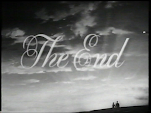
Does the Hollywood Happy Ending Exist?

.


I am happy to be able to provide a link to a downloadable version of my first published piece on the Hollywood 'happy ending' - the subject which was the focus of my doctoral thesis. This essay, the opening chapter of an edited collection called Happy Endings and Films, offers an account of the invariably negative critical reputation that the 'happy ending' has acquired in film studies, arguing for the need to interrogate this reputation. Along the way we touch on David Bordwell, 'Screen theory', the 'self-consciously artificial' happy ending, and Sirk's Written on the Wind (1956).

A brief extract:

"We tend to assume we understand the ‘happy ending’ of Hollywood cinema – both that it exists, and what it is. This essay will question that assumption. [...] Although the term is used again and again in discussions of Hollywood, it is startling to realise that the cinematic ‘happy ending’ has received barely any sustained critical attention, nor has an adequate definition of it ever been agreed upon. [...] It is my belief that most film studies discussions of the ‘happy ending’ reflect less a wish to meaningfully discuss the feature than a widely-discernable desire to construct it as a critical ‘bad object’."

Many thanks to the editors for giving me permission to reprint the piece online.

MacDowell, James. 'Does the Hollywood Happy Ending Exist?' Happy Endings and Films. Eds. Armelle Parey, Isabelle Roblin & Dominque Sipière. Paris: Michel Houdiard, 2010. 15-27.
.