
The
Philadelphia Story opens
with the divorce of wealthy socialite Tracy Lord (Katharine Hepburn) from C. K.
Dexter Haven (Cary Grant). Set over the course of a weekend two years later,
the rest of the film tells of how Tracy comes to call off her wedding to George
Kittredge (John Howard) and remarry Dexter. In the film’s final moments, Tracy
receives a marriage proposal from Mike Connor (James Stewart), with whom she
has had a brief flirtation, though she turns him down – in part because of
Mike’s relationship with his colleague Liz Imbrie (Ruth Hussey). Nervously
addressing the gathered wedding congregation, Tracy looks to Dexter for advice;
he obliges by feeding her lines that amount to a second marriage proposal, and
she accepts. Mike and Liz are corralled in as best man and matron of honour,
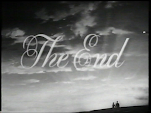
and Dexter and Tracy are re-wed; ‘The End’.
In Beyond
Genre Deborah Thomas makes the point that “so-called happy endings […] are
rarely happy for everyone, especially where romance is concerned” (2000: 21).
One measure of this, as Thomas points out, is the romantic comedy convention of
‘unsuitable’ partners – potential romantic mates whom we are encouraged
consider incorrect matches for the film’s protagonists, and whom we fully
expect not to form part of the final couple (ibid: 20). In The
Philadelphia Story, however, we are invited to measure the relative
merits of the three potential relationships Tracy could form with her three
suitors. Paradoxically (though entirely conventionally), it is Tracy’s fiancé,
George, who is coded as ‘unsuitable’ – in large part due to star casting. For a
time, the two remaining men – Dexter and Mike – seem equally capable of winning
Tracy. Stanley Cavell has argued that both of these men “are honorable and
likeable enough for their happiness at the end to make us happy” (ibid:
135). Yet I would maintain that Dexter is a far less attractive candidate
for her affections than Mike.
Never
once is Dexter on the back-foot with Tracy: he is forever calm, seeming almost
to possess “some mysterious power to control events” (Cavell, 1981: 137). He
arrives at the Lords’ house with at least half a plan and, while he may
improvise in accordance with changing circumstances (Mike’s knowledge of Kidd’s
indiscretions, Tracy’s late-night swim), appears to execute it throughout with
calm authority. This sense of control is further heightened by the fact that,
having been a serious drinker, Dexter has by now given up alcohol; thus rid of
the only “weakness” we learn he has, he is able to maintain a perpetual
self-composure and detached amusement which other characters lack – in
particular Mike and Tracy, whose inhibitions are crucially lowered by
champagne. One result of this is that Dexter is able to conduct himself always
as though he is Tracy’s superior.
Mike and
Tracy, by contrast, encounter one another on a level of comparative equality –
the faults of both (his inverted class snobbery, her unthinking “patronising”)
permitted to become the subject of debate. In contrast to Dexter, who never
veers from an attitude towards Tracy that appears unshakably predetermined,
Mike goes through changes with her, experiencing attraction and
repulsion, tenderness and anger – the pair continually shifting their
estimations of one another. Whereas in the Tracy/Dexter relationship the
characteristic remarriage trope of the “acquisition in time of self-knowledge”
(Cavell, 1981: 56) is entirely one-sided, Tracy and Mike move back and forth,
their interactions becoming a mutual process of learning and discovery –
she realising that “I can’t make you out at all now”, he finding her a “blank,
unholy surprise”, both coming to see that the other “[puts] the toughness
on to save [their] skin”; put simply, they have that which Cavell so values: a conversation.
Although
Tracy and Dexter’s shared past may bring them back together, the fact of this
past also seems to have locked Dexter into a single view of Tracy in a way that
Mike, as the new man on the scene, is able to avoid. As well as this, while
Cavell says of remarriage couples that “what this pair does together is less
important than the fact that they do whatever it is together, that they know
how to spend time together” (ibid: 113), it is striking that in The
Philadelphia Story it is not Dexter, but Mike, with whom Tracy spends the
most time – and certainly the most time alone (in the library, strolling the grounds,
at the party, on the Lord’s veranda, in the pool). The total screen time Mike
and Tracy share comes to approximately 39 minutes, compared to Dexter and
Tracy’s 17; the time they spend alone, meanwhile, is around 16 minutes for Mike
and Tracy, compared with Dexter and Tracy’s 9. Furthermore, as with the screwball couple
in Bringing Up Baby (1938), but unlike Dexter/Tracy, the time Mike and
Tracy share is largely fun. The pair’s drunken play with the
wheelchair-cum-deckchair and midnight swim, for instance, have the air of
precisely the kind of innocent regression – “the wish to be children again or
perhaps to be children together” (Cavell, 1981: 60) – so important to the
creation of the screwball couple. Cavell may emphasise that Tracy and Dexter have “grown up together” (ibid:
136), but it is only with Mike that we see Tracy enjoy hints of the anarchic
pleasures of a second childhood.
I should
make clear that I am not suggesting that Mike and Tracy could satisfyingly form
the film’s final couple according to the terms the film establishes: quite
apart from the qualified but never quite absent class tensions between them,
there is also Liz to think of. What I am suggesting is that, were they
to, the marriage we would be free to imagine for them could surely only be of a
far more democratic sort than any we can conceive of for Tracy and Dexter.
Works Cited
Cavell, Stanley. Pursuits of Happiness: The Hollywood Comedy of Remarriage,
Cambridge, Mass: Harvard University Press, 1981.
Thomas, Deborah. Beyond Genre: Melodrama, Comedy and Romance
in Hollywood Films. Dumfrieshire: Cameron and Hollis, 2000.
.
.
.


